

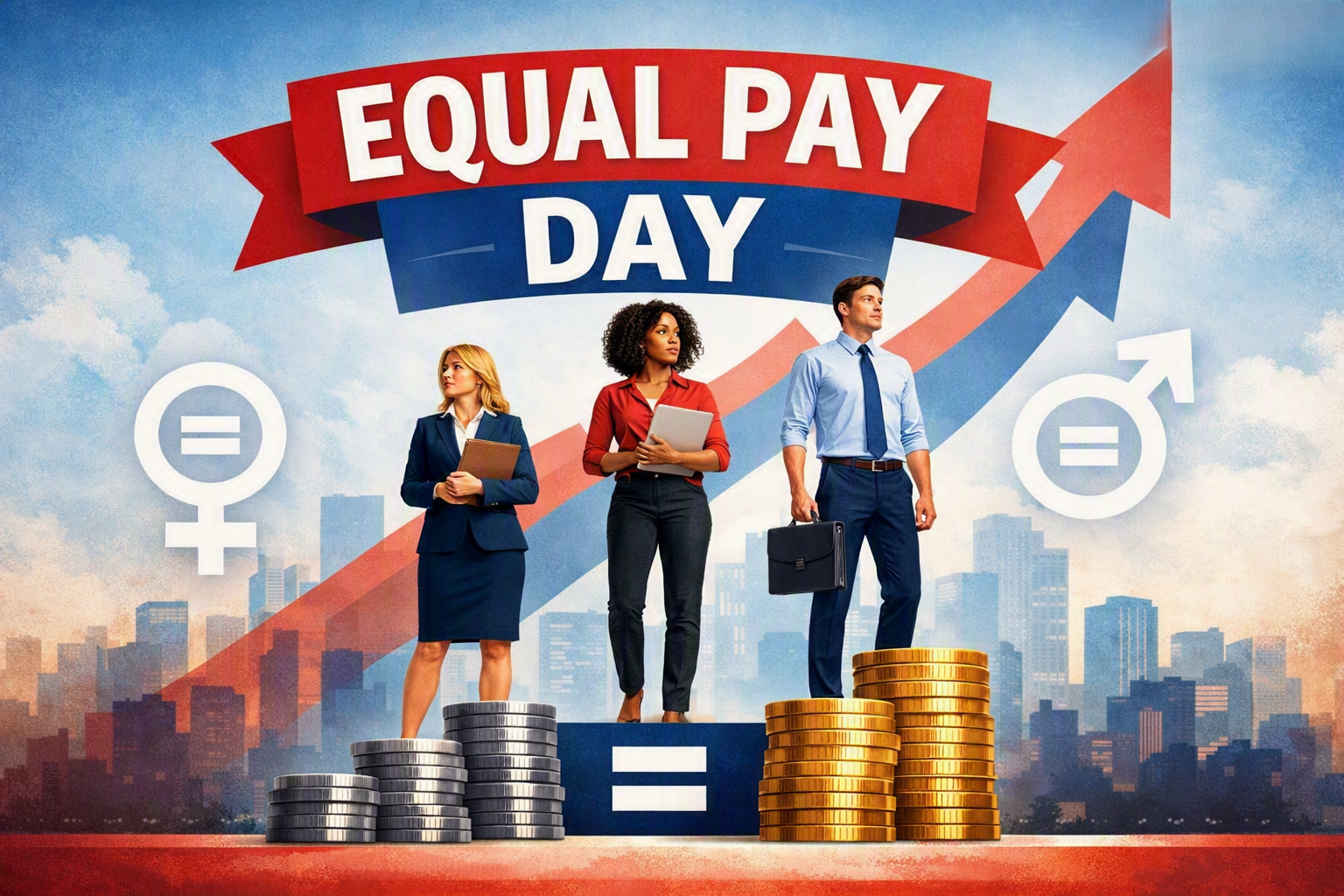
The United Nations marks International Equal Pay Day on September 18. It has been observed since 2020, and for most of that time, the conversation around it has been moral. Women are paid roughly 20 percent less than men worldwide, according to the International Labor Organization. Put another way, women earn about 77 cents for all dollar men earn for work of equal value. In health and care, the gap widens to around 24 percent, which should give pause to anyone running a hospital, a clinic, or a home-care service.
Those figures have been cited at conferences for years. What changed in 2026 is that a large part of the world now has to take measurable action on them.
The compliance clock started in June.
The EU Pay Transparency Directive took effect on 7 June 2026. Member states were required to incorporate it into national law by that date, but most did not. Only four of twenty-seven did so: Slovakia, Italy, Lithuania, and Malta. Sweden has paused implementation entirely. The European Commission has refused to extend the deadline and has signaled that infringement proceedings may follow for states that lag.
It would be easy to read that as breathing room, but it is not. The directive itself is in force. Public-sector employers in late-transposing countries are already subject to it directly, and private employers face courts obliged to interpret existing national law in line with it. The first gender pays gap reports, due by June 2027 from employers with 150 or more workers, will be based on 2026 payroll data. That data is being created right now, in every overtime approval and every starting-salary negotiation.
Why this reaches well beyond Europe
If your organization has a European parent, a European client, a European subsidiary, or bids on contracts where the buyer has its own reporting obligation, this lands on your desk whether or not your government has legislated. Supply chains transmit compliance expectations the way they transmit everything else.
There is a quieter reason, too. The directive reverses the burden of proof. When a pay difference is challenged, the employer must show that the difference is justified on gender-neutral grounds. That is a documentation problem before it becomes a legal one, and documentation problems take months to fix.
What a pay audit actually involves
Most employers I work with assume this begins with a spreadsheet of salaries. It begins earlier than that.
Start with job categorization, not job titles. The standard is equal pay for work of equal value, meaning you can compare two jobs and determine whether they are worth the same. ILO Convention 100 sets out the criteria: skill, effort, responsibility, and working conditions. Applying them honestly to your own structure is uncomfortable work. A payroll clerk and a warehouse supervisor may sit in different departments on different scales yet still perform work of equal value. If you have never tested that, you do not know.
Count all the money. Base salary is the easy part and the least revealing. Allowances, overtime, shift differentials, commissions, bonuses, vehicle upkeep, and acting appointments are where gaps are created, usually without anyone deciding to create them. If overtime is allocated informally by supervisors, the gap starts on the roster rather than in the salary letter.
Look at the raw number before you explain it. The unadjusted gap is the one you will need to report in most jurisdictions. Calculate it, sit with it, then determine how much of it you can account for and how much you cannot. Under the directive, an unexplained gap of more than 5 percent triggers a joint pay assessment with worker representatives, though you are given 6 months to correct it first.
Check your entry points. Asking candidates about salary history is prohibited under the directive, and for good reason. It brings a previous employer’s pay gap into your organization on day one. Also look at who negotiates at hire, who gets promoted in year three rather than year five, and who returns from parental leave to the band they left.
One question worth answering this month
If an employee wrote to you tomorrow requesting the average pay for workers in the same job, broken down by sex, could you provide it within a month? That is the entitlement the directive creates. It is also a fair test of whether your pay structure is deliberate or simply accumulated.
Equal Pay Day falls on a single date each year. The work behind it takes at least a quarter, and job categorization is the part that takes the longest. September is a reasonable month to begin.
G Note Management Services Limited advises organizations across Jamaica and the wider Caribbean on HR structure, job evaluation and pay architecture. If you would like to talk through a pay review for your organization, get in touch.