

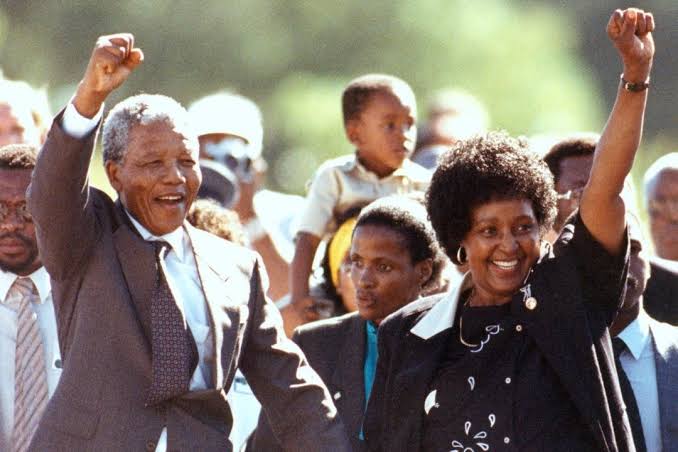
Every year on 18 July, the world pauses to remember Nelson Mandela. But this year, rather than simply pausing, let us reflect on what his life means for how we lead, how we work, and the kind of organizations we are building.
He was born in a rural village in South Africa’s Eastern Cape on July 18, 1918. He studied law. He fought injustice with every tool at his disposal: peaceful protest, legal argument, and eventually, underground resistance. He was arrested, convicted, and sentenced to life imprisonment, spending 27 years on Robben Island, much of it breaking rocks in a limestone quarry under the blazing South African sun.
When he walked out of Victor Verster Prison on 11 February 1990, after nearly three decades behind bars, he did not emerge bitter or vengeful. He emerged with something far more powerful: a clear vision, a steady character, and an extraordinary capacity for grace.
Nelson Rolihlahla Mandela, Madiba, as his nation called him with deep affection, went on to become South Africa’s first democratically elected President, to dismantle one of the most entrenched systems of racial oppression in modern history, and to model for the entire world a form of leadership that was neither loud nor ruthless, but deeply, profoundly human.
On July 18 each year, the United Nations invites all of us to honor his legacy by giving 67 minutes of service to our communities, one minute for each year of his life dedicated to the struggle for justice. It is a small ask, deliberately so, because Mandela understood that great change is built from small acts of decency, repeated consistently by ordinary people who decide to do what is right.
At G Note Management Services Limited, we believe this message belongs in every organization in the world, not just on Mandela Day, but every day a leader shows up and chooses how to treat the people in their care.
“It always seems impossible until it is done.”
Nelson Mandela
A MAN WHO BECAME A MIRROR
What makes Nelson Mandela so enduring as a leadership figure is not that he was perfect; he would have been the first to say he was not. What makes him enduring is that his life holds up a mirror to the rest of us. It shows us what is possible when a human being chooses character over convenience, service over self-interest, and forgiveness over grievance.
Those are not political choices. They are leadership choices. They are choices that managers, supervisors, executives, entrepreneurs, and team leaders face every week, in businesses of every size, across every industry, on every continent.
The question Mandela’s life poses to every leader is quietly devastating in its simplicity: When things get hard, what do you choose?
Do you choose to protect yourself or your team? Do you choose the easy path of blame or the harder road of accountability? Do you hold a grudge or find a way to move forward? Do you lead for recognition or for results that outlast you?
These are not grand, once-in-a-lifetime decisions. They are the daily decisions of leadership. Mandela’s example suggests that how you make them consistently, over time and under pressure, determines whether you will be remembered as someone who merely occupied a position or as someone who led.
“In leadership, character is always more important than strategy.”
Oxford Leadership
SIX LEADERSHIP LESSONS FROM MADIBA, AND WHAT THEY MEAN FOR YOUR BUSINESS
The following are not abstract principles from a textbook. They are drawn directly from Nelson Mandela’s life. We have translated each one into practical, applicable guidance that any leader, regardless of industry, team size, or geography, can begin applying today.
| 01 Lead with purpose, not just a title. Mandela’s famous declaration, “The struggle is my life,” was not a slogan. It was a statement of complete alignment between who he was and what he did. He was not leading from a position; he was leading from conviction. Try this: Can you articulate your organization’s purpose in one sentence? Can every member of your team? If not, start there. | 02 Lead from behind, and develop others Mandela described a leader as someone who “stays behind the flock, letting the nimblest go out ahead.” He understood that the best leaders create other leaders. They do not hoard credit. They build capacity and then step out of the way. Try this: Identify one person on your team ready for more responsibility. Give them that responsibility with support, not abandonment. |
| 03 Forgive, then move forward. When Mandela walked out of prison, he said: “I knew if I didn’t leave my bitterness and hatred behind, I’d still be in prison.” In business, resentment is costly. It clouds judgment, erodes culture, and costs you talent. Letting go is not a weakness; it is a strategy. Try this: Is there a conflict in your team or organization that has been allowed to fester? Name it. Address it. Clear the air and move forward. | 04 Embrace diversity as a strength Mandela built the “Rainbow Nation,” a deliberate vision of a society in which difference was not a problem to be managed but a richness to be celebrated. In the modern workplace, diverse teams consistently outperform homogeneous teams when well led. Try this: Look at your leadership team. Is it as diverse as the community and customers you serve? If not, ask why and ask honestly. |
| 05 Resilience is not passive; it is practice. Mandela did not merely endure 27 years of imprisonment; he used that time. He studied. He strategized. He built relationships with his captors. He chose, every day, to remain purposeful. Resilience, he showed us, is something you do, not just something you have. Try this: When your organization faces a setback, resist the urge to assign blame. Instead, ask: What can we learn? What will we do differently next time? | 06 Character is your most valuable legacy Mandela once said, “Do not judge me by my successes, judge me by how many times I fell down and got back up again.” The organizations people remember are the ones they are proud to have worked for, where the leadership had character. Not perfection. Character. Try this: Ask yourself what the people who work for me would say about the kind of leader I am when I am not in the room. |
ONE QUALITY THAT MADE EVERYTHING ELSE POSSIBLE
Among all the qualities Mandela embodied, one underpinned everything else. It is the quality that is easiest to understand yet hardest to practice. It is the quality that most organizations claim to value, yet few model consistently.
It is empathy.
Mandela was known, by virtually everyone who met him, for his extraordinary ability to make people feel seen, heard, and valued. He remembered names. He asked about families. He looked people in the eye. Whether he was speaking to a head of state or a prison warder, a corporate leader or a child in a township, Mandela engaged with them as a full human being, with genuine curiosity and care.
In the business world, we sometimes mistake empathy for softness. It is not. Research consistently shows that empathetic leaders build higher-trust teams, retain their best people longer, navigate conflict more effectively, and make better decisions because they hear more perspectives and more honest information. Empathy is not a nicety. It is a performance driver.
It starts with something deceptively simple: listening, really listening, not formulating your response while someone else is speaking, and not checking your phone. Not half-present. Fully, genuinely present. Mandela, who spent 27 years in prison, understood better than most what it means to have your voice ignored. He made sure that, in everything he did afterward, no one in his presence felt that way.
“One of the things I learned when I was negotiating was that until I changed myself, I could not change others.”
Nelson Mandela
WHAT THIS LOOKS LIKE INSIDE AN ORGANIZATION
You do not need to have faced what Mandela faced to apply what he taught. You need to be willing to honestly examine how your organization operates and ask whether the values Mandela stood for are present in your daily culture, not just in your mission statement.
Here is what values-driven, Mandela-inspired leadership looks like within a real organization:
It looks like a manager who takes the time to understand what is going on in a team member’s life before concluding that poor performance is a character flaw. It looks like a leader who admits a mistake in front of their team, not because it is comfortable, but because integrity demands it. It looks like an organization that promotes based on talent and contribution, not on who plays golf with whom.
It looks like a team that can disagree without becoming disagreeable, where people feel safe enough to raise a concern, offer a different view, or say “I don’t know” without fear of professional consequences. It looks like a culture where feedback is given with care, conflict is addressed early and directly, and no one has to wonder where they stand.
It looks like an organization that measures its success not only by what it earns but also by the kind of employer it is and the difference it makes in the lives of the people who work within it and the communities it serves.
None of this requires a dramatic gesture or a policy overhaul. It requires a daily decision by every leader at every level to choose the harder, more human path. Mandela made that choice in a limestone quarry on Robben Island. We can make that choice in our organizations.
“It is better to lead from behind and to put others in front, especially when you celebrate victory. You take the front line when there is danger. Then people will appreciate your leadership.”
Nelson Mandela
YOUR 67-MINUTE CHALLENGE THIS MANDELA DAY
The Mandela Day initiative asks each of us to give 67 minutes of service, one minute for each year of his public life. We suggest that this year your organization use those 67 minutes intentionally, not just to volunteer in the community, though that is a worthy and important act, but also to invest in the kind of internal reflection and action that Mandela Day truly calls for.
THE 67-MINUTE MANDELA DAY CHALLENGE
For Your Organization; Saturday, 18 July 2026
1. Minutes 1–15: Reflect. Gather your leadership team. Ask one honest question: “In what ways does our organization live our stated values, and in what ways do we fall short?” Listen without defensiveness.
2. Minutes 16–30: Recognize. Identify three people in your organization who exemplify Mandela’s qualities of quiet service, resilience, empathy, and integrity. Call them out by name and tell them why they matter.
3. Minutes 31–45: Resolve. Identify one unresolved conflict, one festering tension, or one thing your culture has been avoiding. Commit to addressing it before the end of July. Assign accountability and set a date.
4. Minutes 46–67: Recommit. As a team, articulate one concrete commitment to lead more purposefully, more inclusively, and more humanely in the second half of this year. Write it down. Share it..
A FINAL WORD FROM MANDELA DAY TO THE BUSINESS COMMUNITY
Nelson Mandela was not a business leader. But he was something more instructive: a human being who, under conditions most of us will never face, chose, day after day, to be guided by his values rather than by his circumstances. He chose service over bitterness. He chose vision over defeat. He chose people over position.
And in doing so, he left behind something no job title could ever confer: a legacy that outlasted him, grew after his death, and continues, more than a decade after his death in December 2013, to shape how people think about what it truly means to lead.
That is the goal. Not to be the most impressive person in the room, but to be the kind of leader whose example makes the room better. Not to be remembered for what you built, but for the people you built it with and for what they went on to do.
On July 18, wherever you are in the world, take 67 minutes. Give them generously. Then ask yourself what Mandela Day can teach you about the other 364 days of the year.
Because real leadership is not an event but a practice, it starts with the decision, made quietly every morning, to lead as if you actually mean it.
“Education is the most powerful weapon which you can use to change the world.”
—Nelson Mandela
BUILD LEADERS WHO LEAD as THEY MEAN IT
Develop Your Leaders. Strengthen Your Culture.
At G Note Management Services Limited, we design and deliver leadership development, communication, and organizational excellence programs that help your people lead with purpose, integrity, and impact. Whether you are a small business or a large institution, we meet you where you are and take you further.
www.gnotemanagement.com
Serving Jamaica, the Caribbean, and beyond.
Sources & References: Nelson Mandela Foundation | United Nations Mandela Day | Long Walk to Freedom (N. Mandela, 1995) | Harvard Law School Program on Negotiation | Oxford Leadership | TowerStone Leadership Center | Business School Netherlands | Session Research | Quarterdeck Leadership | Impact Hub
© 2026 G Note Management Services Limited. All rights reserved.
Leadership • Values • Culture • Purpose • Mandela Day 2026